The adhesive used in sports flooring plays a critical role in ensuring the surface’s durability, safety, and performance. Choosing between single-component (1C) and two-component (2C) glue can affect installation, maintenance, and long-term reliability. LIKE SPORTS provides expert guidance on selecting the right adhesive for PU, EPDM, or other sports court surfaces.
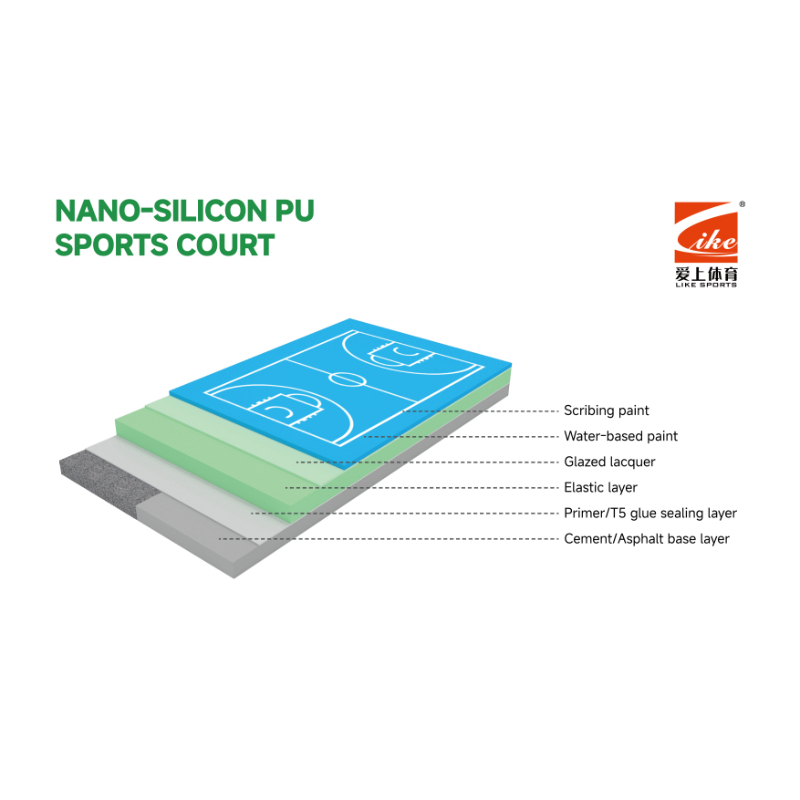
Definition: Single-component glue is pre-mixed and ready for use, requiring no additional components before application.
Advantages:
Convenience: Easy to apply directly from the container.
Fast Application: Speeds up installation on large surfaces.
Less Equipment Needed: No mixing tools required.
Limitations:
Curing Time: Typically slower than two-component systems.
Performance: May provide lower bond strength on challenging substrates or high-stress areas.
Environmental Sensitivity: Temperature and humidity can affect curing and adhesion.
Best Use Cases:
Indoor sports courts with moderate use.
Areas where fast installation is a priority.
Surfaces with standard flat and smooth bases.
Definition: Two-component glue consists of a resin and a hardener that must be mixed before application.
Advantages:
Strong Adhesion: Excellent bonding for demanding surfaces and high-traffic areas.
Durability: Resistant to wear, temperature changes, and moisture.
Versatility: Works well with both porous and non-porous substrates.
Limitations:
Mixing Required: Requires careful measurement and mixing to ensure performance.
Short Working Time: Must be applied within a specific time window after mixing.
Higher Skill Requirement: Proper installation requires experienced installers.
Best Use Cases:
Outdoor courts exposed to sun, rain, or temperature fluctuations.
High-performance basketball, tennis, or multi-sport courts.
Surfaces requiring maximum durability and longevity.
| Feature | Single-Component (1C) | Two-Component (2C) |
|---|---|---|
| Ease of Use | Easy, ready to apply | Requires mixing and skill |
| Adhesion Strength | Moderate | High |
| Durability | Moderate | Excellent |
| Curing Time | Longer | Faster, controllable |
| Environmental Resistance | Sensitive | High |
| Best For | Indoor, low-medium traffic | Outdoor, high-traffic, long-term |
Surface Preparation: Ensure base is clean, dry, and leveled.
Glue Application:
1C: Spread evenly with recommended trowel or roller.
2C: Mix accurately and apply within the working time.
Flooring Placement: Lay PU, EPDM, or other surfaces carefully to avoid air bubbles.
Curing: Allow sufficient time for adhesive to cure completely before use.
Inspection: Check adhesion and uniformity to ensure long-term performance.
Choosing the right adhesive depends on the sports flooring type, usage intensity, and environmental conditions. Single-component glue is ideal for straightforward indoor installations, while two-component glue provides superior strength, durability, and environmental resistance for outdoor or high-performance courts. LIKE SPORTS supports clients with expert advice, high-quality adhesives, and professional installation guidance to ensure every sports floor performs safely and reliably.
Please leave message
Please leave message 




+86 181 2230 3341


