When selecting a surface for sports courts—whether for basketball, tennis, or multi‑use facilities—understanding how Silicon PU and Acrylic systems perform is essential. Both materials have distinct characteristics that influence athlete comfort, durability, maintenance, and cost, making the right choice dependent on the facility’s purpose and usage frequency.
Silicon PU (Silicone‑Modified Polyurethane) combines polyurethane with silicone and often a cushioning layer to create an elastic, poured‑in‑place surface. It typically incorporates a softer bottom layer for impact absorption and a durable top coat for traction and weather resistance.
Acrylic surfaces are generally made of multiple layers of acrylic coatings applied over concrete or asphalt, producing a firm, hard surface with excellent flatness and consistent ball behavior.
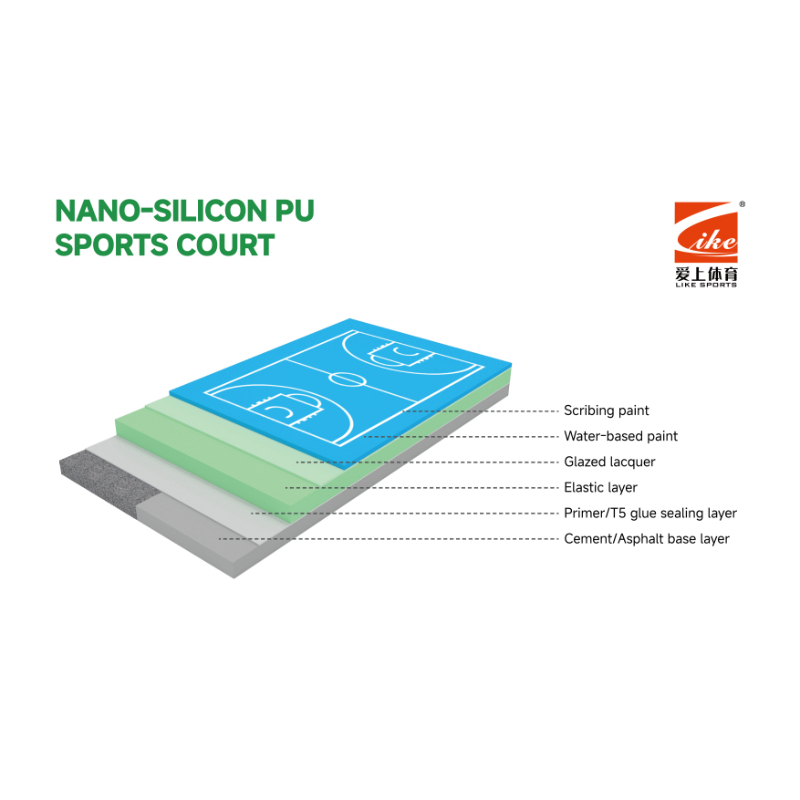
Silicon PU:
High shock absorption: The elastic cushion layer significantly reduces impact stress on joints, lowering fatigue and injury risk during jumping, pivoting, and long play.
Responsive feel: Its moderate elasticity provides both comfort and consistent ball rebound.
Acrylic:
Minimal cushioning: Traditional acrylic offers little built‑in elasticity; players will feel a firmer, faster surface, which can be tougher on knees and ankles during extended use.
Optional cushioned layers: Some acrylic systems add rubber granules for moderate shock absorption, but this still doesn’t match Silicon PU’s level.
Verdict: Silicon PU excels in comfort and joint protection, making it better suited for high‑impact and frequent use. Acrylic prioritizes firmness and speed.
Silicon PU:
Provides consistent ball bounce with a balanced feel, suitable for a variety of sports.
The slightly textured top layer improves grip in wet or dry conditions.
Acrylic:
Offers a hard, uniform surface that delivers precise and fast ball response—ideal for games like tennis or fast‑paced basketball.
Strong line visibility and color contrast enhance gameplay and aesthetics.
Verdict: Acrylic tends to provide faster, more predictable ball behavior, while Silicon PU offers balanced bounce with more comfort.
Silicon PU:
Excellent weather and UV resistance keeps colors vibrant and the surface stable over time.
Longer lifespan with less frequent resurfacing needed (often 8–12+ years).
Acrylic:
Good UV resistance and outdoor performance, but more susceptible to fading and surface cracking over time.
Typically requires more frequent maintenance and resurfacing every few years.
Verdict: Silicon PU usually offers greater long‑term durability and weather resilience, while acrylic remains reliable but may age faster in harsh climates.
Silicon PU:
Higher initial investment due to premium materials and professional installation needs.
Lower long‑term maintenance because of its toughness and seamless surface.
Acrylic:
More affordable upfront and easier to install.
Surface repainting or patching is simpler, though required more often.
Please leave message
Please leave message 




+86 181 2230 3341


